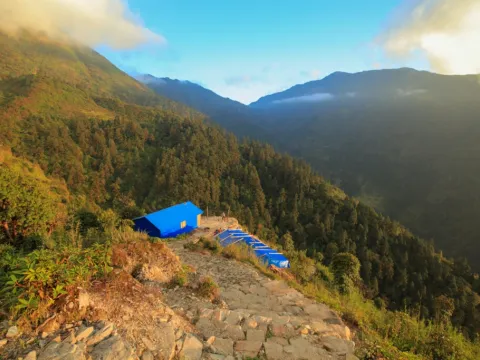
Anonymous for several centuries, W.H. Tilman was the first European to venture for a trek to Panch Pokhari. Panch Pokhari Trek is an alternative trek in Nepal towards the sensational adventure to the sacred Panch Pokhari lakes. Pilgrimage embark on a trek to Panch Pokhari especially during monsoon season in the sacred thread wearing festival namely, Janai Purnima which occurs in Nepali month of Bhadra and coincides with month of August. You are cordially invited to get ready for a 14days trek to Panch Pokhari. Get enmeshed into the ecstasy of venturing throughout the mesmerizing journey into five lakes located at the foothill of Jugal Mountain. Leaving Kathmandu, we will head northeast and drive for about 5hours to reach Chautara which is the Headquarter of Sindhupalchowk district. Chautara is the starting point for trekking in Panch Pokhari. The trail proceeds through river, forest of juniper, pine, rhododendron, bamboo and other alpine flowers where we can get the opportunity of enjoying the views of Himalayan Wildlife. We will climb to the forested ridge and observe the scenic mountain views of Jugal Himal Range, Gaurishankar and Dorje Lakpa. Walking along the trail decorated with prayer flags and chortens, we will pass through the white coloured houses of Tamang and Sherpa ethnics at Nasimpati. Then, we will reach Panch Pokhari after climbing Laurebinayak Pass. Panch Pokhari lake carries a profound religious significance. You can enjoy the panoramic views of Jugal Himal Range, Gosaikunda and Rolwaling Himal Range from Panch Pokhari. Return trail will be through Nasimpati and Dukhang to Melamchipul .It is from here that we will drive back to Kathmandu.Trek Panch Pokhari is the least crowded trekking route and it can be taken throughout the year.
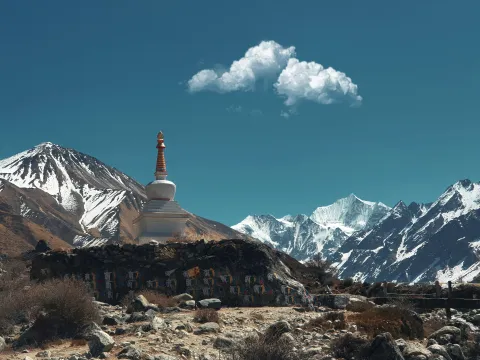
The Langtang Valley trek starts its narrative at the modest elevation of Syabrubesi, situated at approximately 1,550 meters. From this humble beginning, the journey gradually unfolds, taking trekkers through a breathtaking ascent to the majestic heights of Kyanjin Gompa, perched at an elevation of around 3,870 meters.As adventurers traverse the winding trails, they find themselves immersed in a visual symphony of awe-inspiring landscapes. The snow-covered peaks of Langtang Lirung, Dorje Lakpa, and Ganesh Himal create a stunning panorama, standing as silent sentinels against the vast Himalayan sky.Beyond the physical challenge of elevation, the Langtang Valley trek is a cultural odyssey. It weaves through Tamang villages, where the genuine warmth and hospitality of the local residents become an integral part of the experience. A significant stop on this cultural journey is Kyanjin Gompa, a spiritual hub along the route, offering trekkers a profound glimpse into the traditions of Tibetan Buddhism.The ever-changing and diverse landscape of the trek unfolds like a captivating storybook. Lush rhododendron forests transition into serene alpine meadows and pastures dotted with yaks. Along the way, trekkers encounter glacial moraines, high mountain lakes, and the melodious flow of the Langtang Khola, contributing to the rich tapestry of the trek.In the heart of the Langtang Valley, nature's grandeur and cultural richness intertwine seamlessly, creating an unforgettable expedition. Each step taken on this journey is akin to a brushstroke, contributing to the creation of a masterpiece of mountain adventure, where the canvas is painted with the vivid hues of unparalleled beauty and cultural discovery.
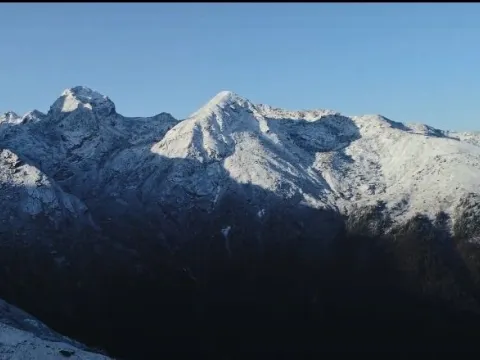
Langtang region in Nepal is located in the North central Himalayan region of Nepal, north of Kathmandu and bordering Tibet. It is a protected region namely Langtang National Park. The region includes numerous peaks including Langtang Lirung (7246m). With about 5,000 indigenous Tamang people living inside the national park area, most of them rely on the park for timber and firewood. The majority of the residents are Tamangs.The park contains a range of climatic zones, from subtropical to alpine. Approximately 25% of the park is forested. Trees include the deciduous Oak and Maple, and evergreens like Pine, including various types of Rhododendron. There are Himalayan wild lives like Himalayan black bear, the goat-like Himalayan Thar, Rhesus, monkeys and Red Pandas. The region is also forged with the stories of Yeti sightings.